Nutrition
Desi Ghee Nutrition and Calories
Published September 2026
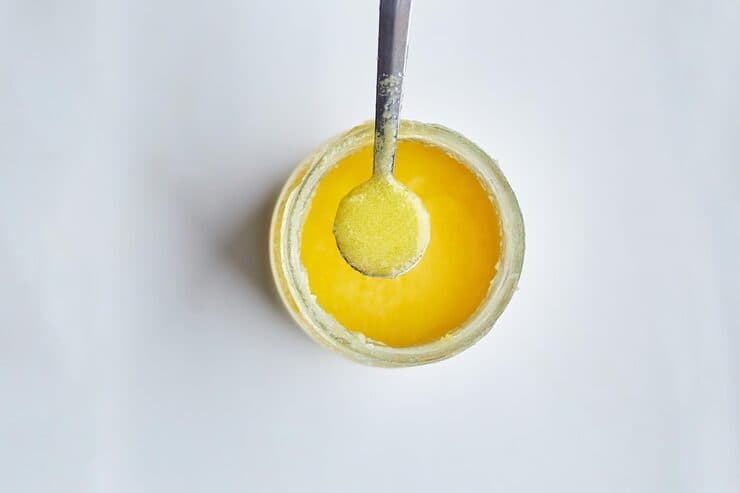
One teaspoon of desi ghee has about 45 calories and almost no protein or carbs. One tablespoon has about 135 calories and roughly 15 g fat. These numbers match clarified butter in USDA databases because ghee is nearly pure milk fat, though homemade batches can vary slightly until fully clarified.
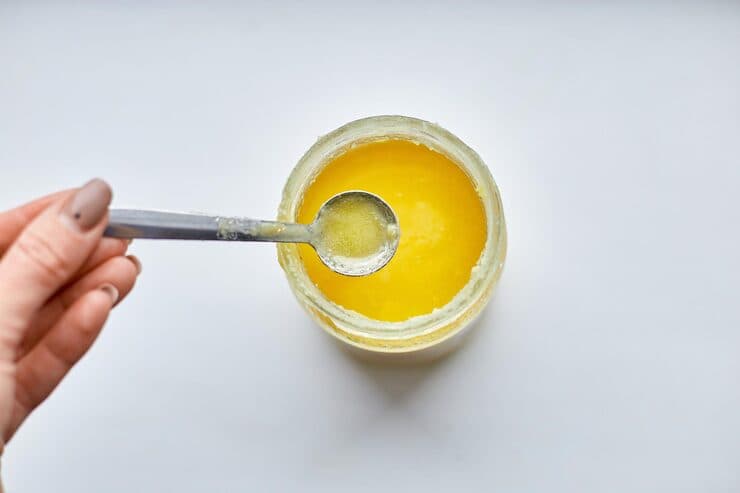
Calories by serving size
These figures align with USDA entries for ghee and clarified butter. If you track macros, weigh homemade ghee once your batch is fully strained and cooled for the most accurate logging.
| Serving | Approx. calories | Fat (g) | Protein (g) |
|---|---|---|---|
| 1 teaspoon (5 ml) | 45 | 5 | 0 |
| 1 tablespoon (15 ml) | 135 | 15 | 0 |
| 1 large serving spoon (~10 ml) | 90 | 10 | 0 |
| 100 g | 900 | 100 | 0 |
Protein, carbs, and micronutrients
Protein in desi ghee is negligible because milk solids are strained out. Carbohydrates are also near zero. Trace vitamins A, D, E, and K remain in the fat phase, but you should not rely on ghee as a vitamin supplement.
Does desi ghee have omega-3? Only in very small background amounts unless fortified. It is not a substitute for fish, flaxseed, or other omega-3 sources.
Why labels and batches differ slightly
Breed, feed, season, and browning time change vitamin traces and flavor compounds. Calories from fat stay near 900 kcal per 100 g for pure products because the macro is still fat.
Buffalo ghee and cow ghee have similar calories per spoon even though buffalo milk yields more fat per liter during production. See buffalo desi ghee for source context.
How desi ghee compares to butter on labels
Butter includes water and milk solids, so equal volume of butter weighs less in pure fat than ghee. When swapping butter for ghee in recipes, use about 20 percent less ghee by volume for similar richness.
| Per tablespoon (approx.) | Calories | Fat (g) | Water |
|---|---|---|---|
| Desi ghee | 135 | 15 | Trace |
| Butter | 102 | 11 | Present |
| Olive oil | 119 | 14 | None |
Fitting ghee into daily intake
A single teaspoon in dal adds modest calories. Several tablespoons across breakfast, cooking, and sweets add up quickly. If you watch saturated fat for heart health, count ghee toward your daily fat budget like any other cooking oil.
Keto and low-carb diets often include ghee because it is carb-free, but total calories still matter for weight change.
Frequently asked questions
How many calories in 1 spoon desi ghee?
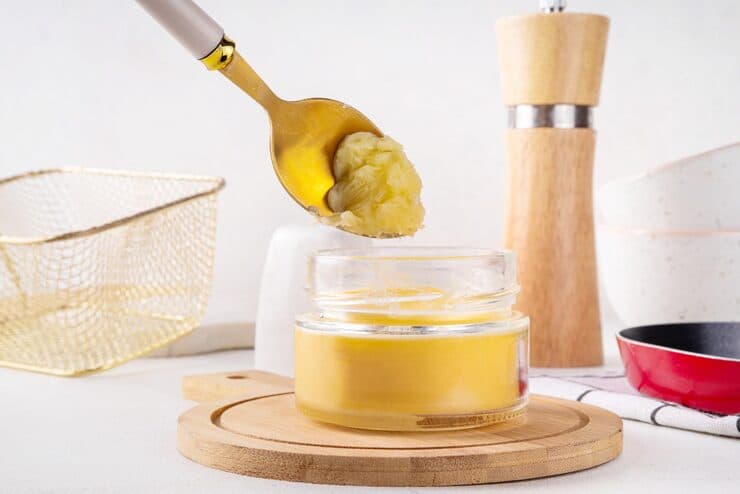
A level kitchen teaspoon holds about 45 calories. A larger serving spoon closer to 10 ml is roughly 90 calories.
Does desi ghee have protein?
No meaningful amount. Straining removes whey and casein solids. Any protein listed on labels is typically rounding or trace contamination.
Is desi ghee keto friendly?
Pure ghee is low carb and high fat, so it fits ketogenic macros in controlled portions. Total calories still count toward energy balance.
Why do nutrition labels vary by brand?
Breed, season, and lab method change vitamin traces. Calories from fat stay near 900 kcal per 100 g for pure products.
Is homemade ghee lower in calories?
Not if fully clarified. Incomplete straining or leftover moisture can slightly change weight per spoon, but fat density remains similar.