Recipes
Desi Ghee Soan Papdi
Published September 2026
Soan papdi depends on thin sugar threads pulled through roasted gram flour. Desi ghee coats the besan during roasting and keeps the threads from turning greasy or dense. Weak or blended fats often produce hard blocks instead of flaky layers.
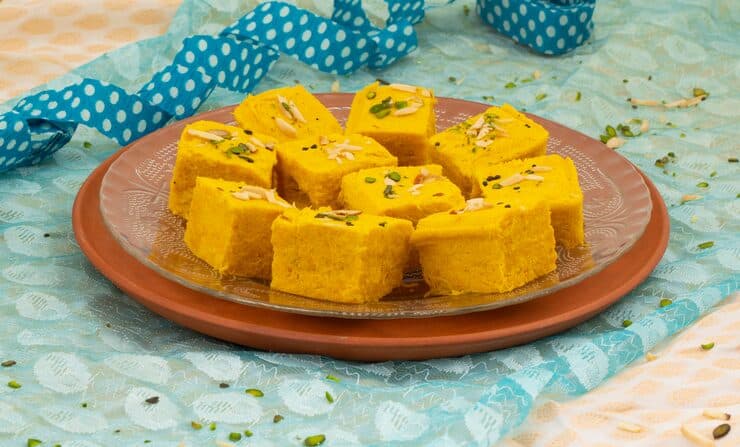
Why ghee matters in soan papdi
Ghee adds aroma during besan roasting and lubricates the mixture so sugar syrup can stretch into fine strands. Shortening without dairy flavor works technically but tastes flat.
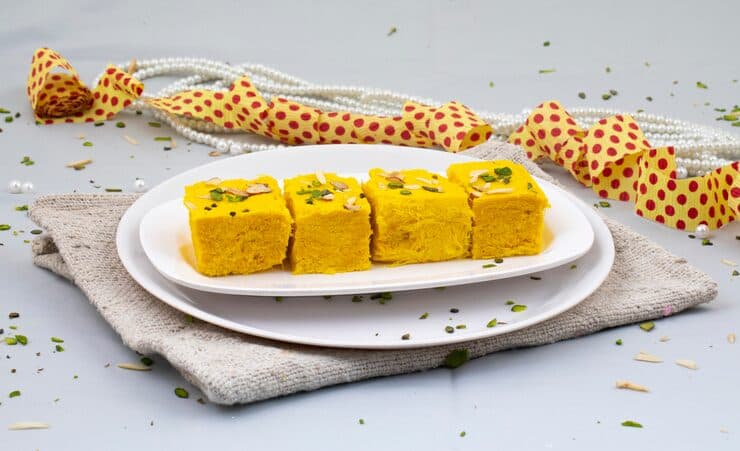
Shop versions may blend buffalo ghee with other fats for cost. Home cooks usually get better flavor with pure ghee.
Ingredients (home scale)
- 2 cups besan (gram flour), sifted
- 3 tbsp desi ghee for roasting, plus 1 tbsp if needed while pulling
- 1.5 cups sugar
- Half cup water for syrup
- 4-5 green cardamom pods, crushed
- Optional: sliced pistachios for topping
Equipment
- Heavy wide pan for roasting besan
- Separate pan for sugar syrup
- Greased tray or thali
- Oiled hands or greased gloves for pulling (advanced)
Step-by-step outline
- Roast besan in 3 tbsp desi ghee on low-medium heat, stirring constantly until nutty and slightly darker, 15-20 minutes. Cool slightly.
- Make sugar syrup: boil sugar and water to one-string consistency (a drop between fingers forms a thin thread). Add cardamom.
- Pour hot syrup into warm roasted besan. Mix quickly.
- Pull and fold the mixture while warm if you can work fast; otherwise press into a greased tray for a softer home-style sheet.
- Top with pistachios, press lightly, cut into squares while warm.
- Cool completely before storing airtight.
Tips for better flakes
- Roast besan low and slow; raw flour taste ruins the sweet
- Syrup stage is critical: too thick makes rock-hard papdi
- Work in small batches; halwai pull at speed most homes cannot match
- Humid weather makes pulling harder; accept a softer texture
- Use fresh ghee with clean aroma from [homemade](/how-to-make-desi-ghee) or trusted jars
Common mistakes
Hard blocks: syrup cooked too far or folding started too late. Pull or press while the mixture is still warm and pliable.
Greasy taste: too much ghee or under-roasted besan. Roast until flour smells nutty, not raw.
Storage
Store airtight at room temperature up to two weeks in dry climates. Separate layers with parchment if stacking. Avoid fridge unless humidity is extreme; cold can dull texture.
Frequently asked questions
Can I use buffalo ghee for soan papdi?
Yes. Buffalo ghee is common in shop recipes. Flavor will be milder than many cow ghee batches.
Why did my soan papdi turn hard?
Overcooked syrup or late folding causes hardness. Work at one-string syrup stage while the mix is still warm.
Can I skip pulling and still call it soan papdi?
Home presses produce a related sweet with softer layers. True flaky threads need fast pulling like halwai technique.
How much ghee compared to besan?
Roughly 1.5 to 2 tbsp ghee per cup of besan for home roasting, adjusted if the mix looks dry while pulling.